SO THE WHITEBOARD MAKES SENSE
CrossTraining glossary
The first time you read a WOD it looks like another language. Here are the terms you will hear in your first class, explained without assuming you already know them.
Workout formats
- WOD
The workout of the day: the WOD is the session on today, different from yesterday’s and from tomorrow’s.
See the movement explained, with video- EMOM
Every Minute On the Minute: you start a movement at the top of each minute and rest whatever is left until the next one. The faster you move, the more you rest.
- AMRAP
As Many Rounds (or Reps) As Possible: complete as many rounds or reps as you can in a fixed time. Whoever tallies the most wins, not whoever finishes first.
- For Time
Against the clock: a fixed amount of work has to be completed in the shortest time possible. Whoever finishes first wins.
- TC (Time Cap)
Time Cap: the maximum time given to finish a block. If you don’t make it, you stop wherever you are.
Scales and intensity
- RX
As prescribed: doing the workout exactly as written, with the intended weight and version of each movement. It is not compulsory or better, just one of the three scales.
See the movement explained, with video- RM
Rep max: the heaviest weight you can lift once with good technique in a given movement. Loads in a workout are often given as a percentage of your RM.
- RPE
Rate of Perceived Exertion: how hard something feels on a scale of 1 to 10, rather than a fixed number of kilos. An RPE 8 is hard but controlled; an RPE 10 is to failure.
Movements
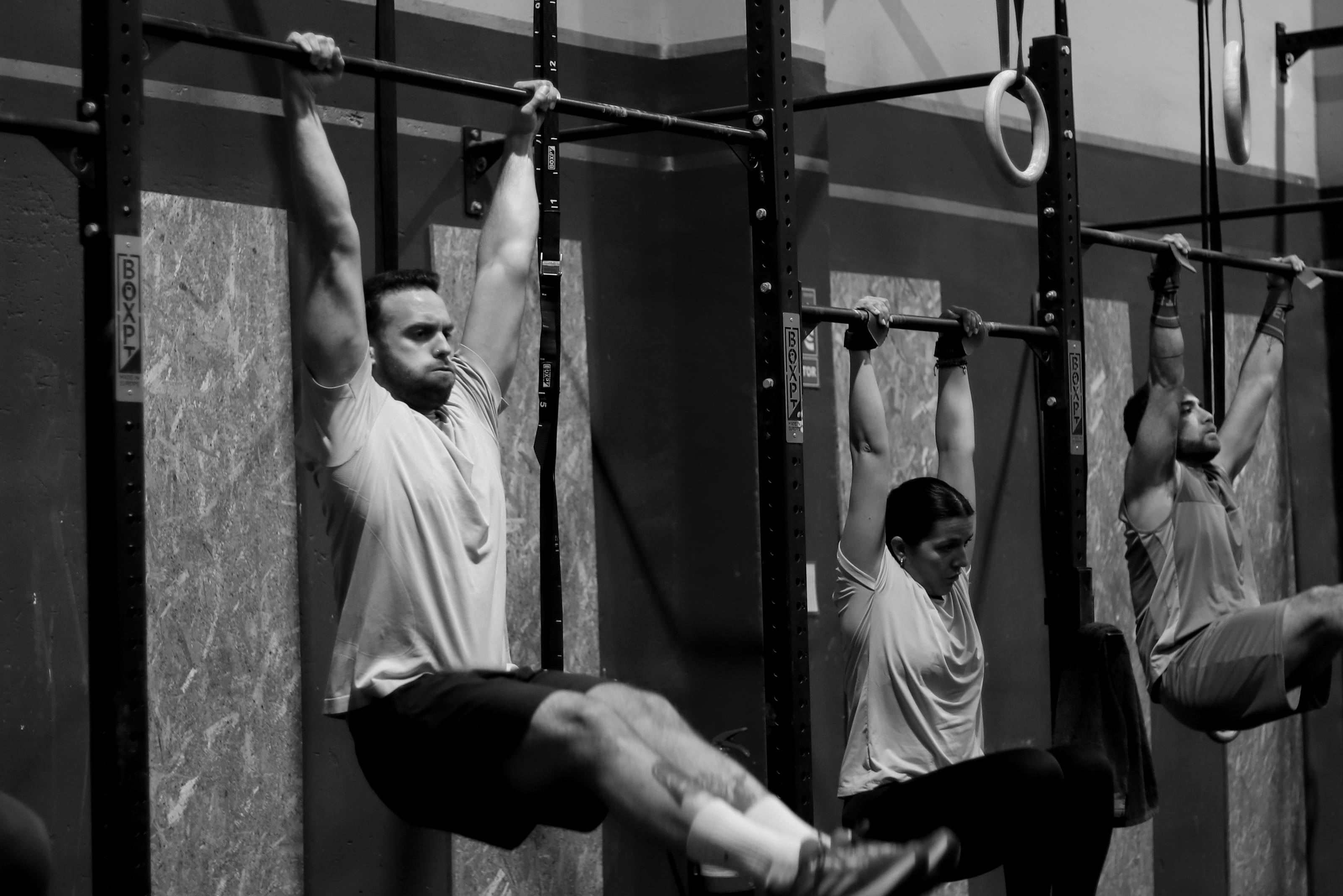
- Toes to Bar
Hanging from the bar, bringing your feet up to touch it. It demands core strength and coordination with the body’s swing.
 See the movement explained, with video
- Power Clean
Lifting the bar from the floor to the shoulders in one explosive movement, catching it in a quarter squat rather than a full squat, which would make it a squat clean.
See the movement explained, with video- Snatch (arrancada)
The bar travels from the floor to overhead in a single movement, caught with the arms already locked out. It is the more technical of the two Olympic lifts and the one that demands the most mobility.
See the movement explained, with video- Clean and Jerk (dos tiempos)
Two movements: the bar first comes from the floor to the shoulders, then goes overhead driven by the legs. The other Olympic lift, and the one that moves the most weight.
See the movement explained, with video- Overhead Squat (OHS)
A full squat with the bar held overhead, arms locked out. It demands shoulder, hip and ankle mobility in equal measure.
See the movement explained, with video- HSPU
Handstand Push-Up: a push-up done in a handstand against the wall. The most demanding version of a shoulder press.
See the movement explained, with video- Wall Ball
A squat with a medicine ball followed by a throw at a target on the wall. It combines legs, core and shoulder in a single movement.
See the movement explained, with video- Double Under (DU)
A jump rope skip where the rope passes under the feet twice in a single jump. It is about timing and wrist speed, not jumping higher.
See the movement explained, with video- Back Squat
A squat with the bar resting on the upper back, across the traps. The base movement of leg strength.
See the movement explained, with video- Wall Walk
From the floor, walking your hands towards the wall while your feet climb up it, until you end up in a handstand. A common step before the handstand push-up.
See the movement explained, with video- Farmer Carry
Walking while carrying a heavy weight in each hand, like carrying the shopping but much heavier. It works grip and core isometrically.
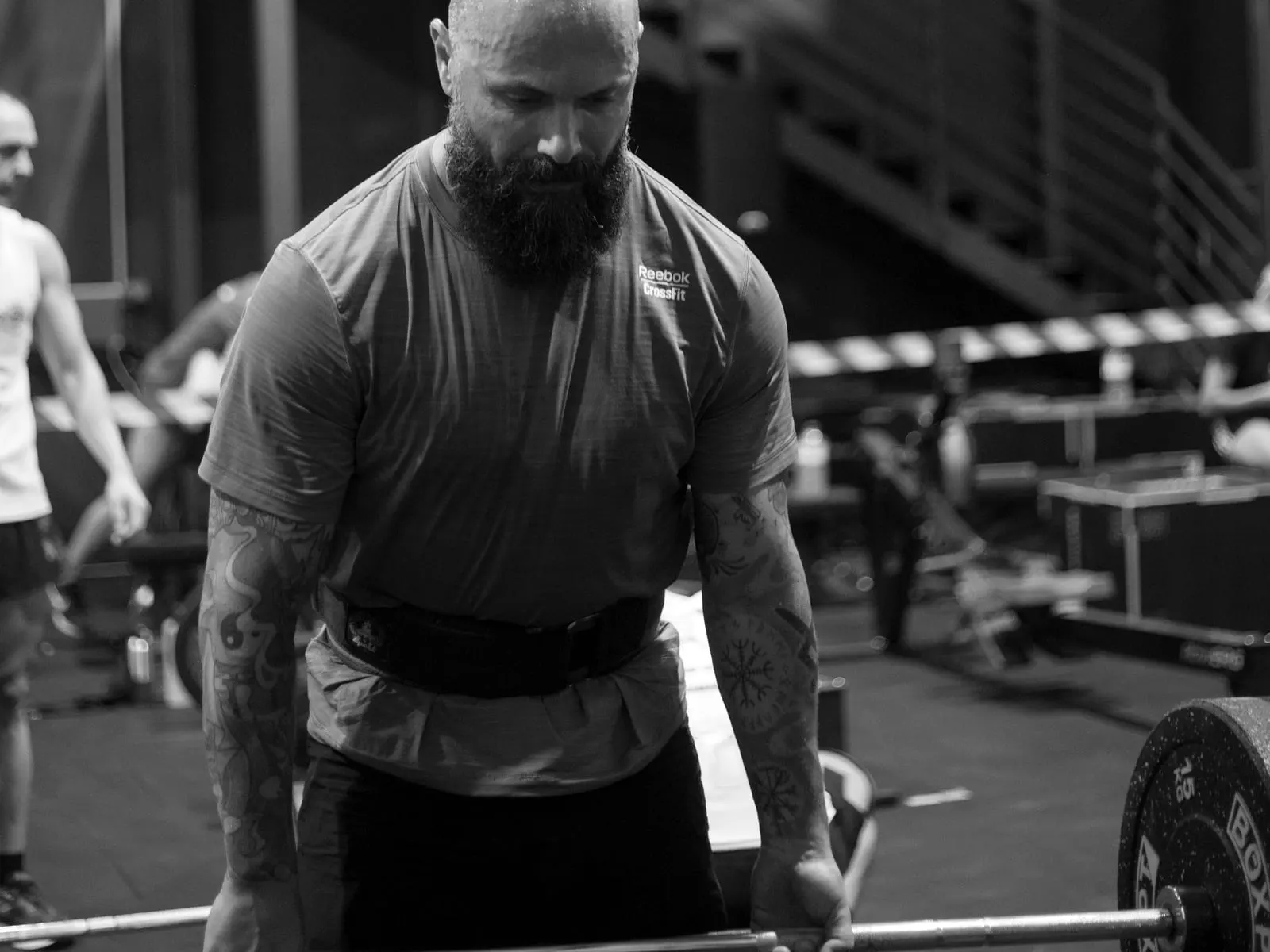
See the movement explained, with video- Deadlift (peso muerto)
Lifting the bar from the floor to standing, with a flat back the whole way up. The deadlift carries the heaviest load of the five basic lifts.
 See the movement explained, with video
- Front Rack
The position where the bar rests on the shoulders, in front of the neck, elbows high. It is where a front squat, a push press or a thruster begins.
- Hip Thrust
With your back against a bench, driving the hips upward with weight across the abdomen. The lift that isolates the glutes the most out of everything seen at the box.
- Burpee (y BRP OTB)
From the floor to standing with a jump, passing through a push-up. The BRP OTB variant (burpee over the bar) adds jumping over the bar at the end of every rep.